Our Path to Superintelligence
The evidence is clear that the environment a brain is grown within plays an outsized role on the ceiling and capabilities of that brain

Oliver Cameron
July 8th, 2026
In recent years, the AI community has spent a disproportionate amount of attention replicating intelligence directly through static training, and comparatively little investing in intelligent, dynamic worlds and collectives that influence and produce such an intelligence. The evidence is clear that the environment a brain is grown within plays an outsized role on the ceiling and capabilities of that brain.
The Worlds We Learn Within
Historically in AI, RL agents have gained intelligence through interaction within predefined, off-the-shelf game environments like Minecraft and StarCraft. These RL agents learn from the experience of existing within a deterministic game world, and sometimes from other intelligences grown within that same environment. Although these game environments have become more complex over time—raising the ceiling of intelligence that can emerge within them—they remain static and deterministic, and do not evolve as the agent’s intelligence improves. Language models, despite their remarkable capabilities, largely inherit a similar limitation. Modern language models are shaped by RL environments that are likewise constructed by hand, and do not evolve alongside the intelligence they are training.
Conceptually, this methodology is like an advanced, intelligent civilization living in a world where there is no possibility of inventing energy sources beyond fire. That world would introduce a ceiling on that intelligence, and any discoveries that could possibly emerge within it.
Enter world models, a conjurer of infinite, dynamic environments that are themselves learned, intelligent systems. These worlds autonomously update and improve based on minor and major interactions with RL agents, humans, and the physical world. By swapping out static, off-the-shelf game environments for learned environments, RL agents become an intelligence operating within an intelligence itself, each recursively challenging the other to improve. A ceiling that previously limited the intelligence would be lifted.
We learn by experience
Intelligence Is Shaped By Its Environment, and Vice Versa
This perspective has increasingly influenced our work. With Agora-1, we demonstrated that multiple participants—human or AI—could share and interact within the same generated world. With PROWL-1, we explored whether RL agents could improve world models by discovering where they fail. The answer is yes. Rather than relying on passive demonstrations, RL agents actively search for situations where the world model breaks down, turning those failures into new training data. As the world model thus improves, increasingly capable RL agents are required to discover the next set of failures, creating a naturally escalating training process. Over time, this creates a coupled system in which RL agents and world models continuously push one another into harder regimes. In this sense, the system becomes a source of open-ended learning: a stream of experience that does not run dry because the RL agents themselves keep extending it.
Furthermore, the richest streams of experience likely will not come from isolated RL agents, but from RL agents sharing a world with others. This means teammates to coordinate with, rivals to outwit, and partners whose behavior must be predicted. From our perspective, the significance of multi-agent worlds extends beyond learning better actions. In the presence of other adaptive intelligences, agents can develop higher-level strategies, options, and predictive knowledge that would not emerge in isolation. Multi-agent worlds may therefore possess a property that single-agent worlds do not: the ability to continuously generate new challenges as agents improve. Every improvement by one agent changes the world experienced by the others, causing the curriculum to evolve alongside the intelligence itself. Rather than being designed entirely by humans, the curriculum increasingly emerges from the interactions between agents, making collectives a promising path toward open-ended learning and more capable forms of intelligence.
Future systems could incorporate learning from interactions between RL agents and humans, and may eventually span both generated and physical environments. Might such a system produce forms of intelligence that extend far beyond those enabled by language models alone? We believe so.
Experience-as-a-Service
A lens within which to view world models is that they are a mechanism through which experience itself can be generated, refined, and accumulated. If experience is increasingly a bottleneck for applications of all types—which seems clear—then world models that can create large-scale experience are a necessary, foundational technology for all humans and AI.
Robotics is an obvious example, whereby accumulating experience in the physical world is notoriously complex, slow, and expensive. A capable world model could instantly enable physical systems to accumulate experience before acting in the physical world, and we already see the earliest signs of this being true. I believe similar arguments apply to science, engineering, education, and many other domains, where experimentation is expensive and the consequences unforgiving. And let’s not forget that we plan to become a multi-planetary species in our lifetime, and the value of an intelligence that can adapt to harsh worlds we humans have had no lived experience in.
Importantly, there’s no reason experience generation should be limited to AI. In fact, it’s necessary to ensure AI does not gain a monopoly over it. Experience improves the human condition, enabling us to be better educated, have more fun, live more peaceful lives, and be safer. This continues to be an essential, important part of our mission.
The World Model
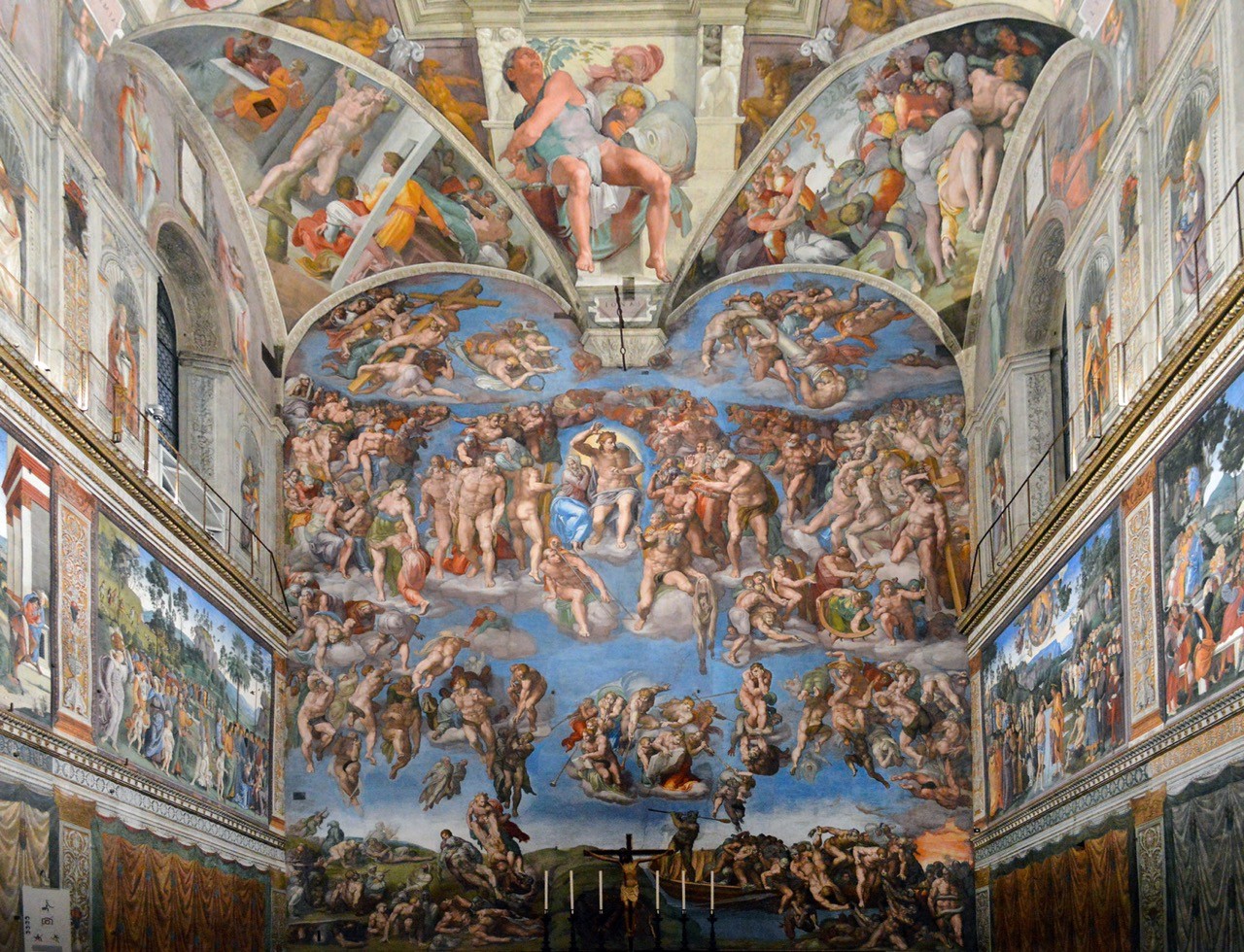
While walking through the Vatican recently, what struck me was how humanity has always been in the process of modeling the world. Through religion, astronomy, mathematics, philosophy, science, and art, we have repeatedly invested enormous effort into understanding reality and our place within it. World models, to me, represent a continuation of that human tradition. They are yet another attempt to construct a representation of reality, and to dig deeper on what our ultimate purpose is. I believe it’s our most ambitious attempt to date, and perhaps through modeling the world in such a way as we propose, we may better understand our place in the cosmos.